History
Georgia's history begins in the 4th century BC, when the kingdoms of Colchis and Iberia were unified. In 337 AD it became one of the first countries in the world to adopt Christianity as a state religion. The era of David the Builder and Queen Tamar (11th–12th centuries) is known as Georgia's Golden Age.
Nature and geography
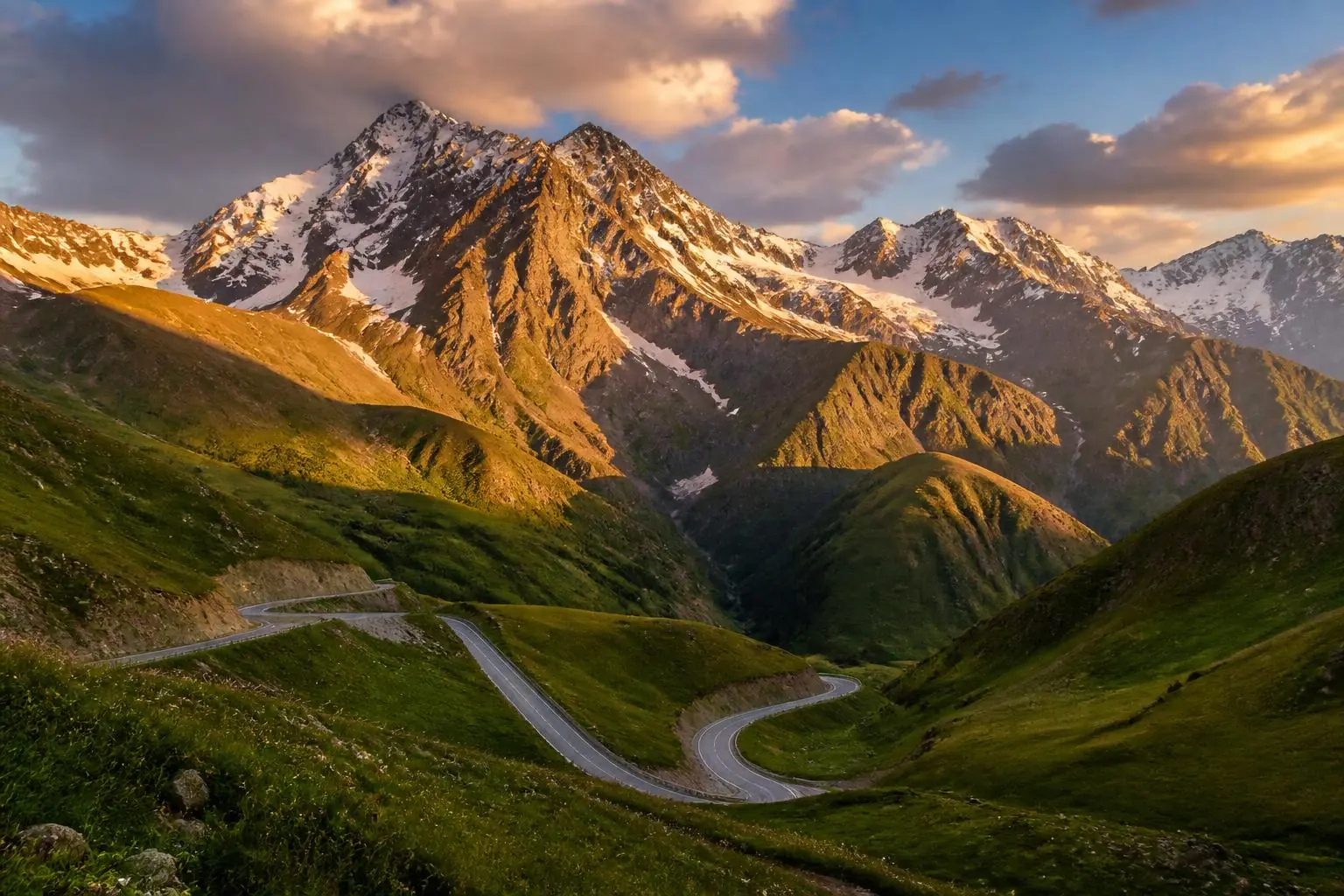
Despite its small size, Georgia is remarkable for the diversity of its landscapes — from the Black Sea coast to the eternally snowy peaks of the Caucasus. You'll find alpine meadows, the subtropical forests of Colchis, the semi-deserts of Vashlovani, canyons and mineral springs.
Wine — an 8,000-year tradition
Georgia is the cradle of wine — the ancient qvevri winemaking method, recognized by UNESCO, is still alive today. The country grows more than 500 endemic grape varieties. Kakheti, Racha and Imereti are the main wine regions.
Gastronomy
Georgian cuisine is the heart of the supra (feast) culture. Khinkali, khachapuri (Adjarian, Imeretian, Megrelian), mtsvadi, chakapuli, lobio, satsivi, churchkhela — every region has its own unique dish. It's also a perfect choice for vegetarians — vegetable and herb dishes take up more than half of the table.
The Georgian alphabet
The Georgian script is one of only 14 unique alphabets in the world, on the UNESCO Intangible Heritage list since 2016. Three historical varieties — Asomtavruli, Nuskhuri and Mkhedruli — are still in use today.
Safety for travelers
According to Numbeo, Georgia is one of the safest countries in Europe. Low crime rates, 24/7 rescue services in mountain regions, visa-free entry for 90+ countries, and the famous Georgian hospitality make traveling here safe and comfortable.